If the last Copy.ai review you read mentioned GPT-3, a simple template library, and a free plan capped at 2,000 words, you were reading something written back when Copy.ai was a very different product. It’s changed more than most AI tools in the last couple of years, and a lot of what’s still online hasn’t caught up.
I’ve been using Copy.ai for actual marketing work, blog drafts, product copy, and some of the newer automation features to figure out what it’s actually good at now, not what it used to be good at. Here’s my honest take on whether it’s still worth it as an ai copywriting tool, what changed, what it costs today, and how it stacks up against the other tools people usually put on a “best ai marketing tools” shortlist.
Copy.ai in 2026: What This Review Covers (Not What It Used to Be)
Copy.ai launched back in 2020 as a short-form copy generator think Facebook ad variations and product descriptions, the kind of quick copywriting AI tool you’d use for a single task and close the tab. That version of Copy.ai is basically gone.

Today, Copy.ai describes itself as a “Go-to-Market AI Platform,” and that’s a genuinely accurate description, not just marketing language. It’s built around Workflows (automated, multi-step content and outreach pipelines), Agents you can train on your own process, Brand Voice controls, and an Infobase that stores your company’s context so you’re not re-explaining your product in every prompt. Sales teams use it for account research and outreach; marketing teams use it for content at scale; it’s no longer just a copywriting tool with templates bolted on.
That’s important context before you read the rest of this review, because whether Copy.ai is “worth it” now depends heavily on whether you’re looking for a copywriting assistant or a broader marketing and sales automation system. Both are genuinely on offer here.
Copy.ai Review: Is It Still Good for CopywritingStill Good for Copywriting?
If you’re mainly here to find the best ai for copywriting headlines, product descriptions, blog drafts, ad copy. Copy.ai still does that job, it’s just no longer the whole story.
What It Does Well
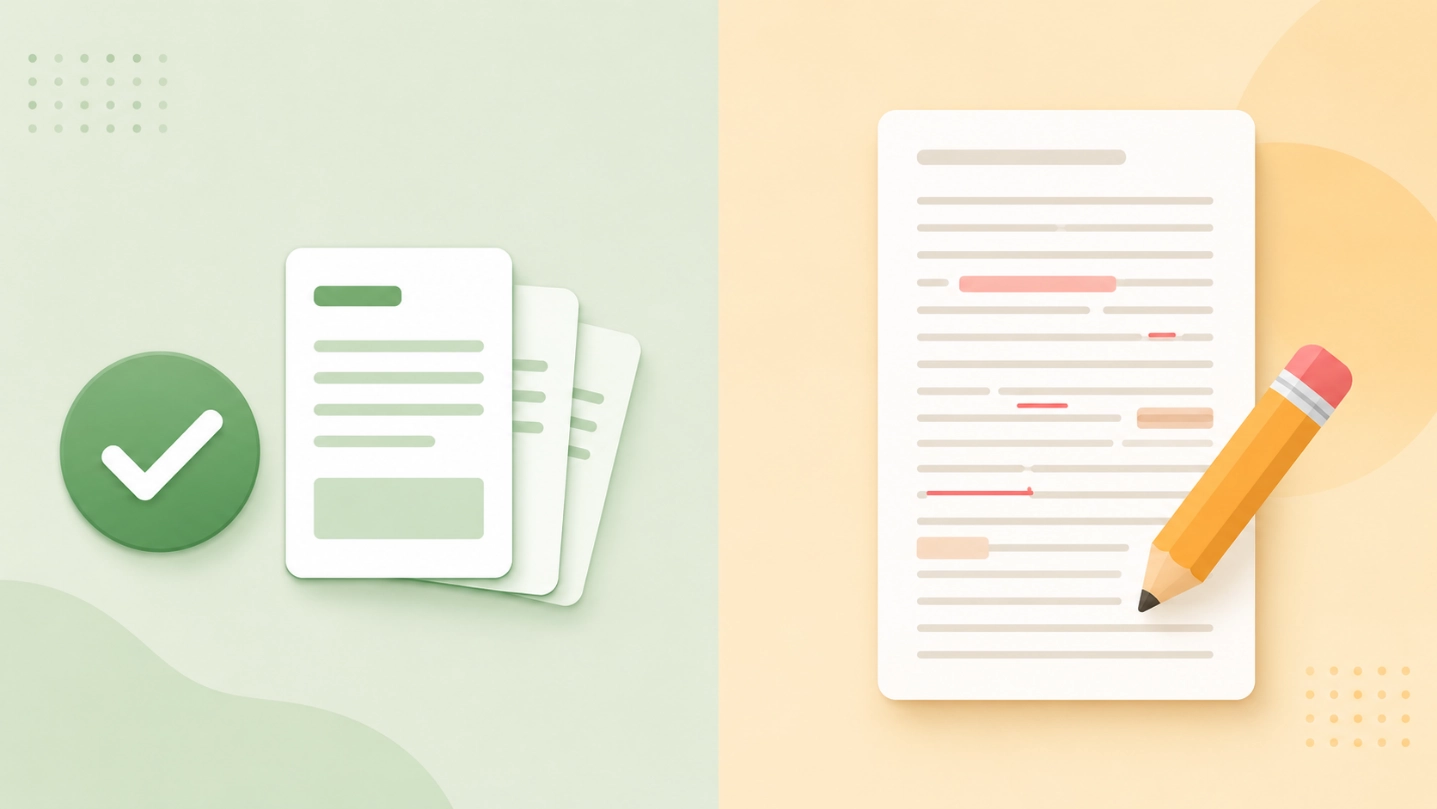
- Short-form copy is genuinely fast and solid. Ad variations, headlines, and product descriptions come out usable with light editing, which is exactly what it was originally built for.
- Brand Voice actually helps. Once you set it up with samples of your own writing, output stops sounding like generic AI copy and starts sounding closer to your own tone. A real improvement over the old template-only approach.
- The Infobase saves real time. Not re-typing your product details, audience, and positioning into every single prompt adds up over a busy week.
Where It Falls Short
- Long-form content still needs a heavy editing pass. Blog posts and longer pieces can read generically or repeat structure, especially past the 800–1,000 word mark. I wouldn’t publish anything from it without a real edit.
- Accuracy isn’t guaranteed. Like any AI writing tool, it will state things confidently that aren’t true. Fact-check anything with a specific claim, statistic, or date before it goes anywhere public.
- It’s easy to over-pay for features you won’t use. If you only need copywriting, a chunk of what you’re paying for (Workflows, Agents, sales tooling) may go untouched.
A concrete example from my own testing: I gave it a product description brief for a mid-range kitchen gadget, with Brand Voice trained on a few paragraphs of my own writing. The first draft was usable with maybe two sentences reworked. I asked for the same brief without Brand Voice turned on, and the difference was obvious flatter, more generic, the kind of copy that reads like it came from a template. If you’re going to use Copy.ai for anything client-facing, setting up Brand Voice properly isn’t optional, it’s the difference between a usable draft and something you’ll rewrite from scratch.
Copy.ai for Marketing Teams: Beyond a Simple Copywriting Tool
This is where Copy.ai has genuinely differentiated itself from most other ai tools for marketing that stop at “generate text.” The Workflows feature lets you chain steps together — research a topic, draft the content, adapt it for different channels, and hand off the output — instead of running each step as a separate manual prompt.
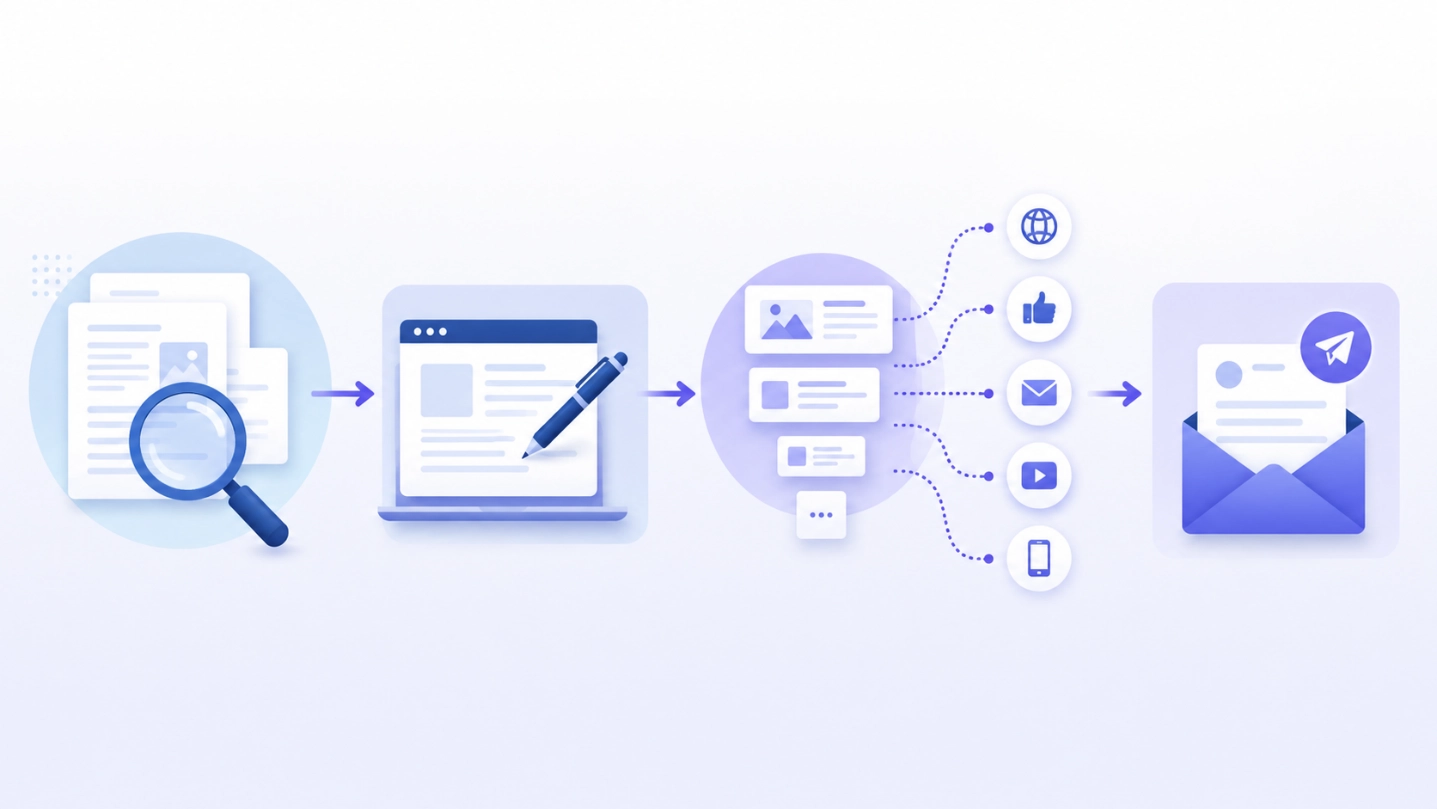
For marketing teams specifically, the features worth knowing about:
- Workflows — automated, repeatable content and campaign pipelines instead of one-off prompts
- Content Agent Studio — train an agent on your specific process or content type
- ABM and account research — pull company and contact info to personalize outreach at scale
- Multi-language content generation — genuinely useful if you’re producing content across markets, not just translating after the fact
If you’re a solo blogger or freelancer, most of this is overkill and you’ll likely stay in the Chat and template side of the product. If you’re on a marketing team juggling campaigns across channels, this is where Copy.ai starts to look less like “an AI writer” and more like actual infrastructure.
Copy.ai Review: Common Complaints Worth Knowing About
No honest review skips the annoying parts, so here’s what shows up repeatedly in user feedback beyond my own experience:
- Support and billing can be slow. Several users report delayed responses and friction when trying to cancel or downgrade a plan — worth testing on a monthly plan before committing annually.
- Integrations aren’t always smooth. If you’re plugging Copy.ai into a more advanced marketing stack (beyond the basics), expect some friction compared to tools built specifically around that integration.
- Long-form output has a recognizable pattern. Repetitive sentence structures and a certain AI “sameness” show up often enough in longer pieces that heavy editing isn’t optional if the content is customer-facing.
None of these are dealbreakers on their own, but they’re worth weighing against the price, especially if you’re deciding between an annual and monthly commitment.
Copy.ai Pricing in 2026: What You’ll Actually Pay
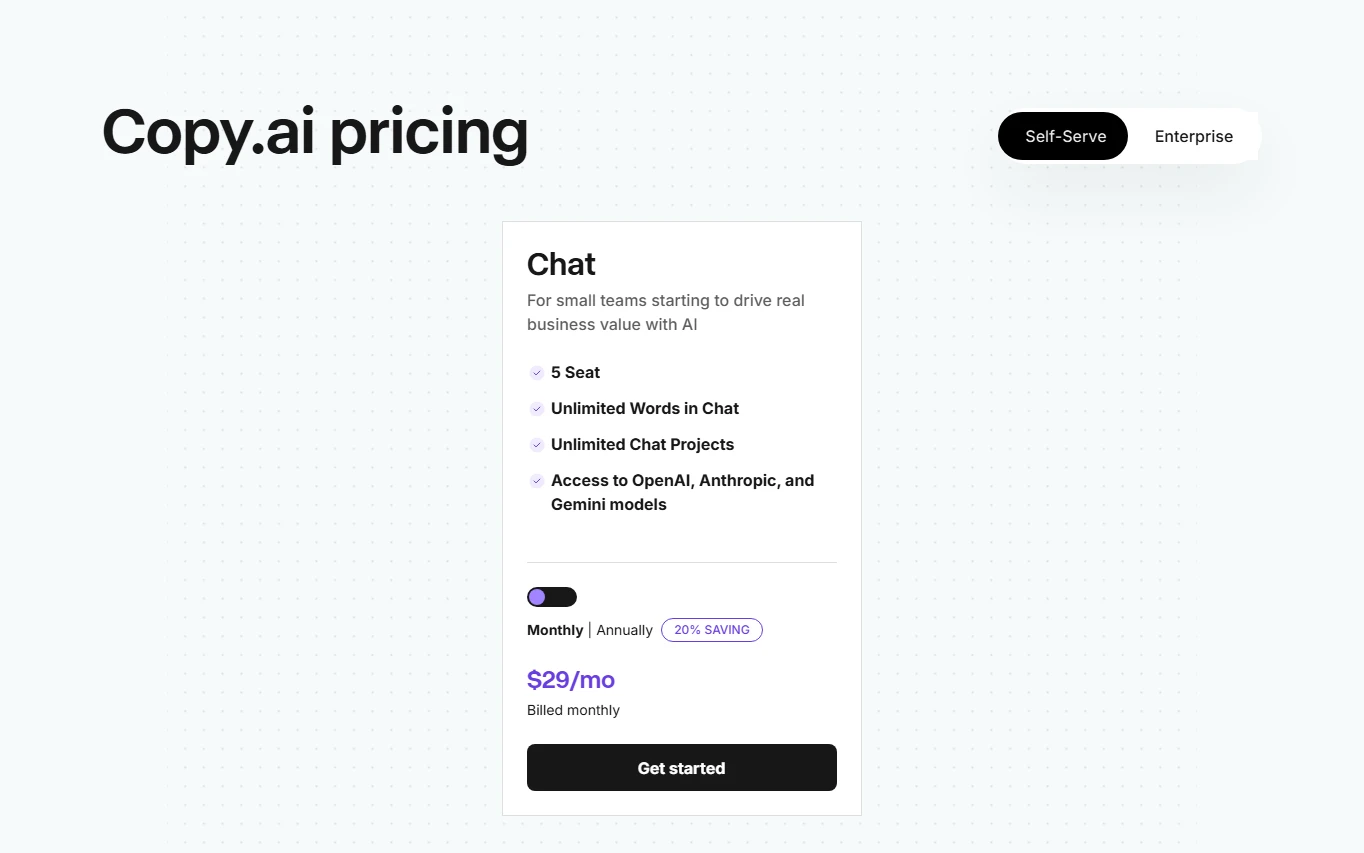
Copy.ai’s pricing has grown more complicated as the product expanded, and published numbers vary a lot between sources right now — a sign that the tier structure is still shifting. Here’s the shape of it as of this writing:
- Chat plan — Copy.ai starts self-serve buyers at $29/month (or $24/month if you pay annually), covering up to 5 seats and unlimited chat usage. Note: unlike older reviews you might find online, Copy.ai no longer lists a free self-serve tier on its main pricing page, though the site still promotes some free tools separately. Confirm this directly before you plan around it.
- Workflow and Agent tiers — Once you need automation instead of just chat, prices jump fast. Copy.ai charges roughly $249/month for its Agents/Advanced tier, and Growth or Scale tiers can run into the thousands per month. Workflow credits, not seats, drive most of this cost: every research step, scrape, or draft eats a credit, and heavier workflows burn through your monthly allotment quickly.
- Enterprise — Copy.ai negotiates Enterprise pricing individually and adds guided onboarding, API access, and bulk workflow support for larger teams.
Copy.ai vs. the Best AI Marketing Tools: How It Compares
Copy.ai isn’t the only name that comes up when people search for the best ai marketing tools, and it’s not the automatic best fit for everyone.
- Jasper is still the more mature option for larger marketing teams — its brand voice and campaign tooling are more polished, but you pay a real premium for it.
- Writesonic is cheaper on paper, but the lower-tier plans lean on less capable models, and it shows in output quality once you compare side by side.
- Claude or ChatGPT, used directly, are worth considering if you mainly want a strong writing assistant and don’t need workflow automation or a template library at all — you’ll pay less and get comparable (sometimes better) prose quality, just without the marketingspecific tooling.
Copy.ai’s real edge is the workflow and GTM automation layer, not raw writing quality. If that’s not what you need, a plain chat-based AI tool might genuinely serve you better for less money.
Who Should (and Shouldn’t) Use Copy.ai
Worth it if you:
- Run a marketing team producing content across multiple channels regularly
- Want automated, repeatable workflows instead of one-off prompting
- Do outbound sales or ABM work that could use AI-assisted research and personalization
Skip it if you:
- Only need occasional short-form copy — a free AI chatbot will cover that
- Are a solo blogger writing long-form content — you’ll get better prose from a general writing tool for less money
- Have a tight budget and won’t use the workflow or agent features you’d be paying for
Frequently Asked Questions
Is Copy.ai good for copywriting in 2026?
Yes, for short-form copy especially — headlines, ads, product descriptions. Long-form content still needs a real editing pass, and the platform’s bigger strength now is workflow automation rather than raw writing quality alone.
Is Copy.ai still free to use?
There’s still a free plan, but it caps monthly word generation at a level that’s fine for testing, not for regular use. Most people who stick with Copy.ai end up on a paid plan within the first month.
What is Copy.ai best used for now?
Marketing and sales teams that want repeatable, automated content and outreach workflows, not just a one-off writing tool. If you only need occasional copywriting help, it’s more product than most individuals need.
Is Copy.ai better than Jasper?
It depends on your budget and team size. Jasper’s brand voice and campaign features are more mature for larger teams, but Copy.ai is generally the better value if you’re smaller and want workflow automation without Jasper-level pricing.
Does Copy.ai use ChatGPT?
Not directly. Copy.ai runs on a mix of large language models, including newer models beyond the GPT-3-era system some older reviews still reference, plus some of its own fine-tuned models for specific tasks.

Final Verdict: Mt Copy.ai Review Summed Up
Copy.ai in 2026 isn’t the simple template tool a lot of reviews still describe it’s grown into a legitimate marketing and sales automation platform, and that’s a real upgrade if you actually need the automation. If you’re just looking for the best ai for copywriting on a budget, it still works, but you’re paying for a lot of platform you might never touch.
Try the free plan first, use it for a real task instead of a demo prompt, and decide based on whether the Workflows and automation side of it actually saves you time that’s where its value lives now, not in the template library alone.
Used Copy.ai for something specific? [Insert your preferred CTA here — comments, email reply, or a link to your own AI marketing tools roundup.]