
Best ChatGPT Prompts for 2026: 50+ Prompts to Work Smarter

Zaid Imran | Tech Analyst & AI Operations Specialist
Updated: August 2026 | Tested: Daily, Over 4+ Months
How this guide was produced: I used these prompts in actual daily work over several months, not a weekend test, drafting content, researching topics, planning marketing copy, and structuring reports that needed to hold up under real deadlines. Every prompt in this guide was refined through repeated use, not written once and assumed to work. OpenAI did not provide free access to paid tiers or sponsor this guide.
ChatGPT can be incredibly useful, but there is a catch: the quality of the answer often depends on the quality of the prompt.
A vague request such as “write a blog post about AI” might give you something usable, but it probably won’t match your audience, tone, goals, or expectations. Give ChatGPT enough context, explain the result you want, and tell it what to avoid, and the quality can change dramatically.
That is why I put together this practical collection of the best ChatGPT prompts for 2026.
Instead of filling the page with dozens of slightly different prompts, I’ve organized the most useful ones around real tasks people use ChatGPT for—from writing and marketing to research, productivity, and everyday work.
You can copy these prompts as they are, or replace the text inside the brackets with your own information.
What Makes a Good ChatGPT Prompt?
A good prompt does more than tell ChatGPT what to do. It gives the model enough information to understand the task, context, audience, desired result, and limitations — a principle that lines up with OpenAI’s own prompt engineering guidance.”
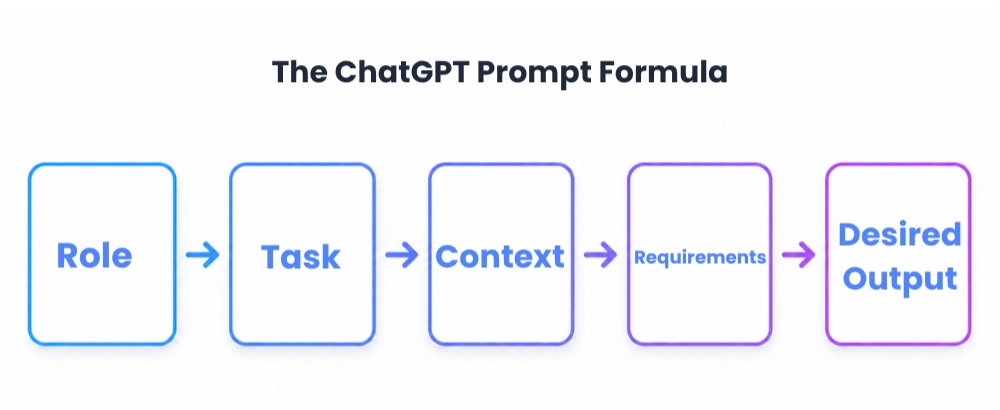
A simple formula I recommend is:
Role + Task + Context + Requirements + Desired Output
For example, instead of:
“Write a blog post about AI.” Try:
“Act as an experienced technology writer. Write a beginner-friendly 1,500-word article explaining how AI writing tools work. The audience is small-business owners in the United States. Use simple language, practical examples, clear H2 headings, and avoid exaggerated claims.”
The second prompt gives ChatGPT a much clearer target.
Should You Write Long Prompts?
Not necessarily.
A longer prompt isn’t automatically a better prompt. What matters is whether the information you provide is relevant and specific.
For a simple task, a few sentences may be enough. For a complex task, adding context, examples, constraints, and an output format can make a major difference.
Best ChatGPT Prompts for Writing
Writing is one of the easiest areas to improve with better prompts. Instead of asking ChatGPT to “write something,” give it a specific role and explain what you’re trying to accomplish.

1. Blog Post Planner
Prompt:
Act as an experienced content strategist. I’m writing an article about [TOPIC] for [TARGET AUDIENCE]. Create a detailed content outline that covers the reader’s main questions, important subtopics, practical examples, and common misconceptions. Organize it with H2 and H3 headings and suggest what each section should accomplish. Avoid unnecessary sections and keyword stuffing.
2. Writing Improvement Prompt
Prompt:
Act as a professional editor. Improve the following text for clarity, grammar, flow, and readability while keeping my original meaning and personality. Remove repetition and awkward wording, vary sentence structure, and avoid generic or overly formal language. Do not add facts that aren’t supported by the original text.
Text: [PASTE YOUR TEXT]
3. Content Idea Generator
Prompt:
Act as a content strategist for [NICHE]. Give me 20 useful content ideas for [TARGET AUDIENCE]. Prioritize topics that solve specific problems, answer common questions, or help readers make better decisions. For each idea, provide a suggested title, search intent, and the main problem it solves.
Best ChatGPT Prompts for SEO
ChatGPT can help with SEO planning, but it shouldn’t replace keyword research or independent fact-checking.Google’s own guidance on people-first content is still the benchmark worth writing toward.

4. Search Intent Analyzer
Prompt:
Search intent is one of the core concepts behind Google’s Search Essential, and getting it wrong is one of the most common reasons content underperforms.
Analyze the keyword “[KEYWORD]” and identify the likely search intent. Explain whether the search is informational, commercial, transactional, or navigational. Then describe what a searcher would expect to find on a high-quality page targeting this keyword.
5. SEO Content Brief
Prompt:
Create an SEO content brief for “[PRIMARY KEYWORD].” Include the likely search intent, important secondary topics, questions readers may have, recommended H2/H3 sections, potential internal linking opportunities, and information that should be verified before publication. Focus on usefulness rather than keyword repetition.
6. SEO Title Ideas
Prompt:
Generate 15 SEO-friendly titles for an article targeting “[PRIMARY KEYWORD].” Keep the primary keyword naturally prominent, make each title useful and specific, and avoid clickbait. Give me a mix of straightforward, benefit-focused, and curiosity-driven options.
Best ChatGPT Prompts for Marketing
Marketers can use ChatGPT to brainstorm ideas, organize campaigns, and create variations that can then be reviewed and refined.

7. Marketing Campaign Planner
Prompt:
Act as a digital marketing strategist. I’m promoting [PRODUCT/SERVICE] to [TARGET AUDIENCE] in [LOCATION]. Create a practical campaign plan covering the main message, content ideas, channels, calls to action, and metrics to monitor. Keep the recommendations realistic for a [BUDGET] budget.
8. Ad Copy Generator
Prompt:
Create 10 advertising variations for [PRODUCT/SERVICE]. The target audience is [AUDIENCE]. Each variation should have a different angle, such as saving time, solving a specific problem, convenience, or value. Keep the copy clear and avoid unsupported claims.
Best ChatGPT Prompts for Productivity
One of the most useful ways to use ChatGPT is to turn an overwhelming task into a sequence of smaller actions.

9. Turn a Goal Into a Plan
Prompt:
I need to accomplish this goal: [GOAL]. Break it into practical steps that I can complete in order.
Identify dependencies, the highest-priority tasks, potential obstacles, and what I should do first. Keep the plan realistic and don’t add unnecessary complexity.
10. Meeting Notes Summarizer
Prompt:
Turn these meeting notes into a concise professional summary. Separate the output into: key decisions, important discussion points, action items, responsible people, deadlines, and unanswered questions. Do not invent information that isn’t present in the notes.
Notes: [PASTE NOTES]
Best ChatGPT Prompts for Research
ChatGPT can help you organize research, but important information should always be checked against reliable sources.

11. Research Assistant
Prompt:
Help me research [TOPIC]. First, break the topic into the most important questions I need to answer. Then identify what types of reliable sources I should consult for each question. Separate established information from claims that require verification, and tell me which details I should fact-check before publishing.
12. Compare Two Tools
Prompt:
Compare [TOOL A] and [TOOL B] for [USE CASE]. Evaluate their features, ease of use, pricing, strengths, limitations, and ideal users. Don’t declare a winner based only on the number of features. Explain which tool is more appropriate for different types of users.
Best ChatGPT Prompts for Business

13. Business Idea Evaluator
Prompt:
Evaluate this business idea: [IDEA]. Analyze the target customer, problem being solved, potential value proposition, competitors, possible advantages, major risks, and questions I should answer before investing money. Be realistic and point out weaknesses rather than simply encouraging the idea.
14. Customer Persona
Prompt:
Create a practical customer persona for [PRODUCT/SERVICE]. Include the customer’s likely goals, problems, buying concerns, decision factors, common questions, and the type of information that would help them make a purchase. Clearly label assumptions that would need real customer research.
How to Get Better Results From ChatGPT Prompts
Even the best prompt may produce a weak answer if you treat the first response as the final answer.
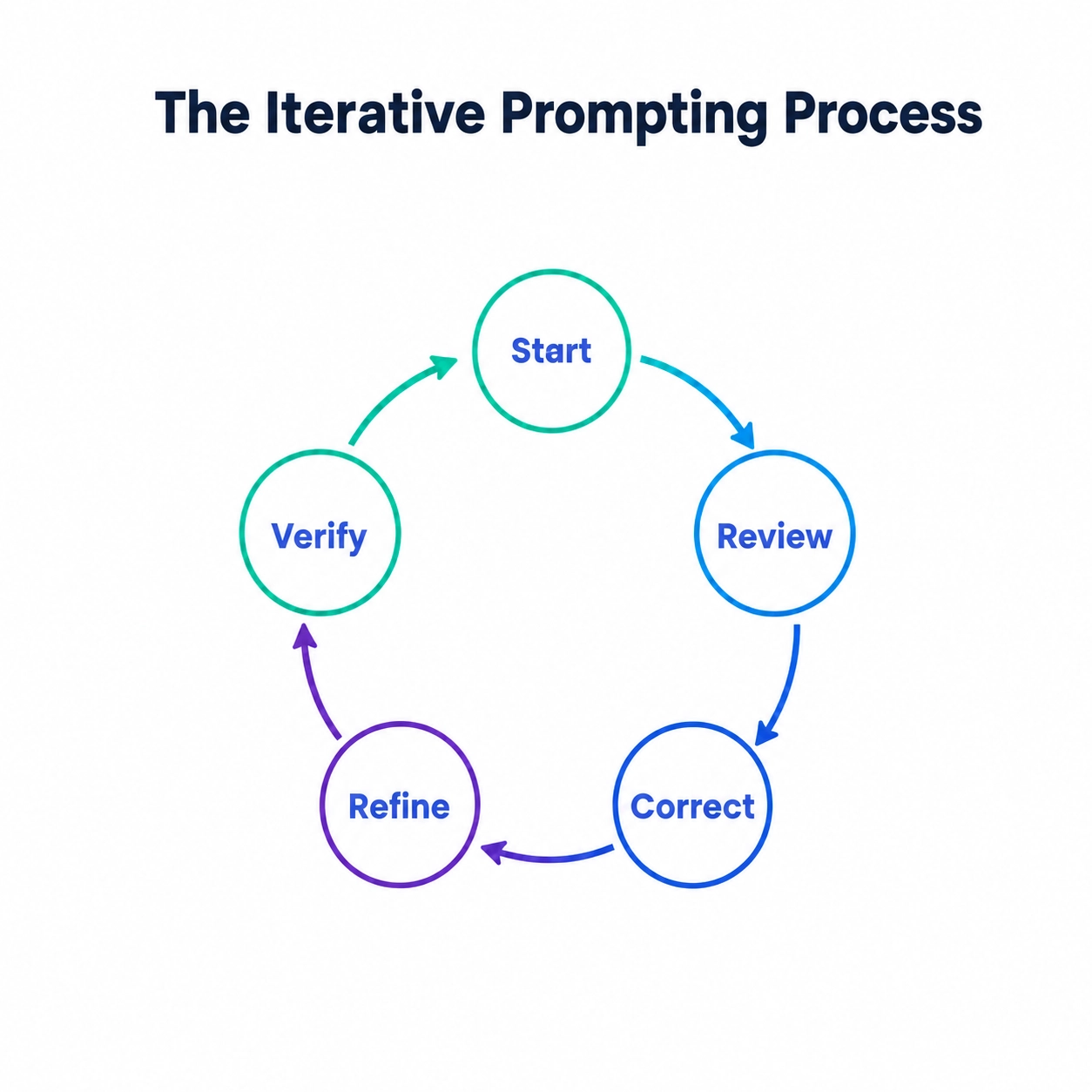
I recommend an iterative approach:
Start → Review → Correct → Refine → Verify
If the response is too generic, tell ChatGPT exactly what is missing.
For example:
“The answer is too general. Rewrite it for experienced marketing managers and include specific examples.”
You can also ask ChatGPT to ask you questions before completing a complicated task:
“Before answering, ask me the five most important questions you need to understand my requirements.”
This is particularly useful for writing, business planning, research, and technical tasks.
Don’t Put Sensitive Information Into Prompts
Be careful about pasting passwords, private customer information, confidential business documents, or other sensitive data into an AI tool. If the information isn’t necessary for the task, remove it or anonymize it first.
Frequently Asked Questions About ChatGPT Prompts
What are the best ChatGPT prompts?
The best ChatGPT prompts are specific to the task you’re trying to complete. Strong prompts usually provide context, explain the desired result, identify the audience, and include important constraints.
How do I write a good prompt for ChatGPT?
Start by clearly explaining what you want ChatGPT to accomplish. Then provide relevant context, requirements, examples if useful, and the format you want in the final response.
Can ChatGPT prompts improve writing?
Yes. Well-designed prompts can help with brainstorming, outlining, editing, rewriting, summarizing, and adapting content for different audiences. However, important facts and final copy should still be reviewed by a person.
Are longer ChatGPT prompts better?
Not always. A short, specific prompt can outperform a long prompt filled with unnecessary information. Add detail when it helps ChatGPT understand the task or constraints.
Can I reuse the same ChatGPT prompt?
Absolutely. Reusable prompts are particularly useful for repetitive tasks such as content briefs, email drafting, product descriptions, research frameworks, and customer-support workflows. Save successful prompts and adapt the variables for each new task.
Final Thoughts
The biggest improvement you can make with ChatGPT isn’t necessarily learning hundreds of prompts. It’s learning how to give the AI enough direction to produce the result you actually need.
Start with a clear task, provide useful context, specify the audience and desired format, and don’t be afraid to refine the response. For important work, treat ChatGPT’s output as a starting point rather than unquestionable fact.
If you’re building a more advanced AI workflow, the next step is to learn how to create reusable prompts for your specific job or industry. That is where prompt writing becomes much more valuable than simply collecting a long list of generic prompts.